
There is usually a moment when things quietly shift — in the background of everyday life. Not dramatic, not sudden. Just a soft awareness that something feels slightly different. This is where considered, professional care begins.
Beginning something new — especially when it involves your body — can feel like a risk. There is often hesitation. Questions that have stayed quietly unspoken for a long time.
That moment of first disclosure is not forced here. There is never an expectation that you arrive with clarity. No pressure to present yourself as someone who already knows what they want. Instead, you are met exactly where you are.
Conversations begin naturally — not structured, not rushed. You are encouraged to speak freely, even if what you are feeling is difficult to name. Some people arrive with a very specific intention. Others come with a feeling — a shift, a quiet awareness that something has changed. Both are equally valid here.
What matters is not how precisely you can define it. What matters is that you feel genuinely heard. There is no interruption. No assumption. No effort to steer you too quickly toward any particular outcome. Instead, there is real listening — the kind that allows for pauses, for reflection, and for honesty. From that place, something begins: not a fixed plan, but a direction that feels considered, personal, and entirely your own.

Decisions about the body are rarely only functional. They carry emotional weight, personal history, and a sense of self that deserves to be treated with care — not efficiency. Professional treatment done well means understanding all of this, and responding to each person accordingly.
Every treatment is carried out within professional clinical standards. Non-invasive approaches are chosen deliberately, with a clear commitment to your safety and comfort at every stage of the process.
Genuine results rarely happen overnight. Sustainable, natural-looking changes are built gradually — allowing the body to respond, and allowing you the time to observe and adjust throughout the process.
No two people arrive at the same place for exactly the same reason. Professional treatment accounts for the individual — their concerns, their history, their comfort level — and responds to that specific person, not a category.
Understanding what you are doing — and why — matters enormously. Information is shared clearly, in language that is easy to understand, so that any decision made is genuinely yours, not one shaped by pressure or incomplete knowledge.
Concerns about the body are often intertwined with self-esteem, identity, and personal history. Thoughtful professional care recognises this and approaches each conversation with the sensitivity those topics deserve.
A professional environment removes the noise. There are no decisions rushed, no timelines imposed. Clarity arrives naturally when the space for it is created — and that is what a considered clinical approach makes possible.
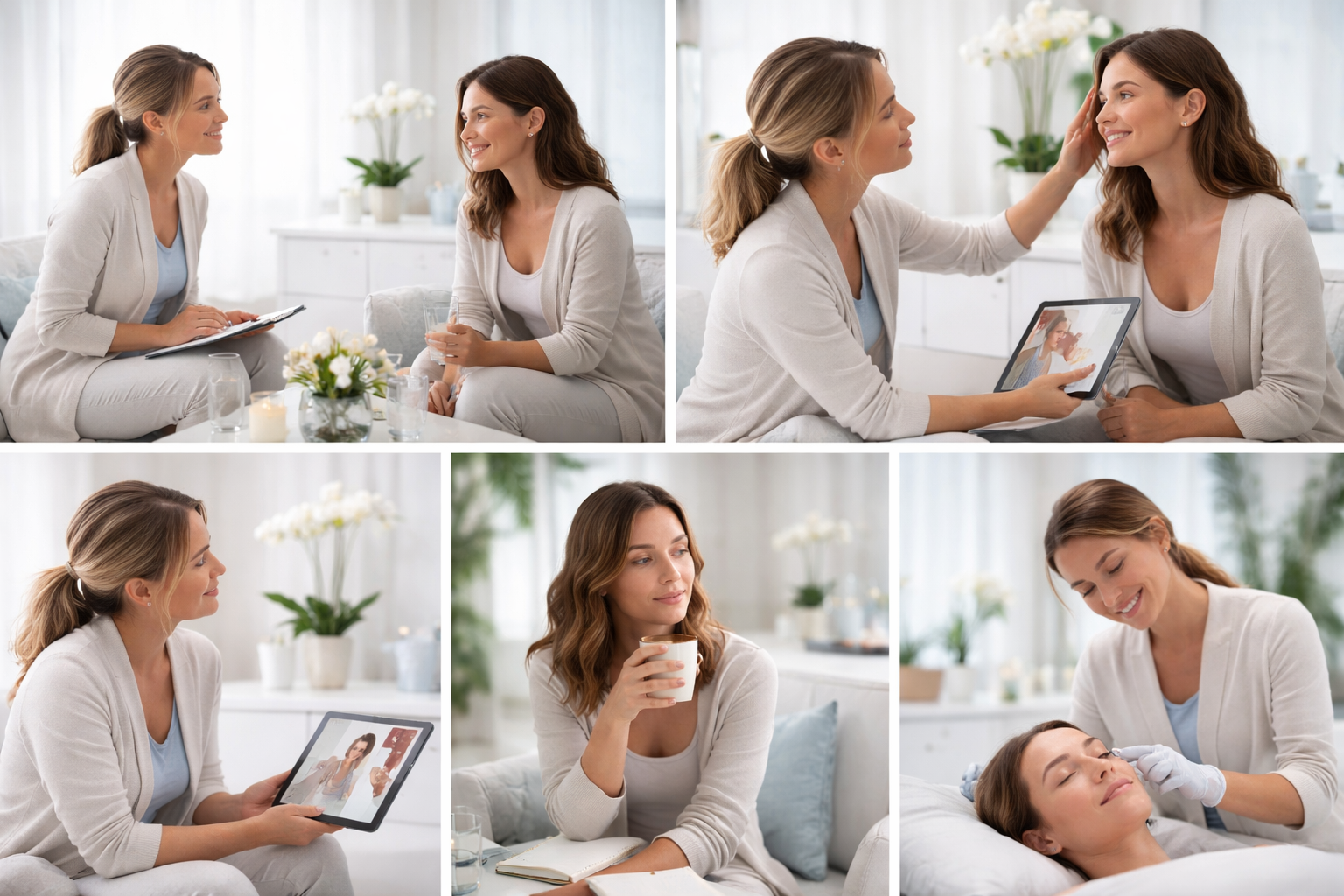
Every step in the treatment process is designed around you — not a standard protocol, but a considered approach that unfolds at a pace that feels manageable and natural.
The process begins with a conversation — not an interview. There is no structured form to fill in, no checklist to work through. You speak freely about what you have been noticing, what concerns you, or simply what has brought you here. There is no expectation of perfect clarity. Partial thoughts, unclear feelings, and uncertainty are all completely welcome.
From that initial conversation, a clearer picture forms — of who you are, what matters to you, and what you might benefit from. This is not a template assessment. It is a genuine attempt to understand your specific experience, including any previous encounters with treatment, your comfort with different approaches, and what outcome would feel meaningful to you personally.
Treatment possibilities are introduced as exactly that — possibilities. Each option is explained clearly, in language that is easy to understand. The purpose, the process, and what to realistically expect are all covered. There is no urgency to move forward immediately. Time to think, to ask questions, and to reflect is built into this stage as standard.
Nothing progresses until it feels right to you. If that means returning after some time to reflect, that is entirely expected. If it means choosing to explore one option while leaving others aside for now, that is respected. The process is designed so that any decision you make is one you feel fully comfortable with — not one you felt steered toward.
Treatment itself unfolds gradually. Changes are not sudden or overwhelming — they develop over time in a way that allows you to observe, adjust, and remain comfortable throughout. Each stage is explained before it happens, and your experience and feedback remain central to how things proceed.
There is no single type of person who seeks non-invasive aesthetic care. People arrive from many different places — emotionally, physically, and in terms of what they are hoping for. What tends to be consistent is not a shared goal, but a shared readiness to explore.
Some people carry a quiet awareness for months or even years before they feel ready to do anything about it. That kind of considered readiness — slow, personal, and private — is completely understood here. There is no pressure to have arrived sooner.
Others notice a change more recently — perhaps following a change in life circumstances, physical health, or simply the natural progression of time. Whether the concern is new or long-standing, it receives the same quality of attention and care.
If you value understanding fully before making any decision, that approach is not only welcomed — it is encouraged. Taking time to gather information, ask questions, and sit with your thoughts before deciding on anything is seen as sensible, not indecisive.
Non-invasive aesthetic care is not only for people with a definite plan. It is equally suited to those who are simply exploring — who want to understand what might be possible and what it would involve, without being under any obligation to proceed.
If your interest is in modest improvement rather than dramatic transformation — in feeling more at ease in your own skin rather than looking entirely different — then a non-invasive approach is well suited to that kind of expectation.
Some people come having previously encountered environments that felt rushed, clinical, or dismissive. If that is part of your story, it is acknowledged here. The approach here is designed specifically to feel different — more human, more thoughtful, and more respectful of your individual experience.
Body concerns vary greatly between individuals — in how they feel, how long they have been present, and what they mean to the person experiencing them. Below is an overview of the kinds of concerns that non-invasive aesthetic treatments are designed to address.
Many people experience areas of the body that seem resistant to change — places where fat accumulates or remains despite consistent effort in other areas of wellbeing. This is not a reflection of effort or discipline. It is simply how the body distributes and holds onto fat, which can vary significantly between individuals and change over time.
These areas often cause frustration not because they look a certain way to others, but because of the disparity between what a person expects and what they experience. Non-invasive fat reduction treatments are designed to address this specifically — offering targeted, gentle approaches to areas where the body's natural distribution has created something that feels out of alignment.
Changes from these treatments are gradual and proportional. The aim is never to overhaul, but to nudge — to introduce subtle shifts that feel natural and sustainable, and that develop in a way you can observe and adjust to comfortably over time.
Skin changes over time in ways that can be difficult to articulate. It may feel less structured than it once did, or respond differently to touch or movement. These changes are entirely normal — they are a part of how the body evolves — but that does not mean they have to be accepted without any option for support.
Skin tightening treatments work by encouraging the skin's natural processes of renewal and support. They are non-invasive, meaning they work with the skin rather than against it, and they are designed to produce results that look and feel natural — not overcorrected, not artificial.
The objective is always equilibrium. To return a sense of support to skin that has shifted over time, in a way that still feels like you — not a version of you that belongs to a different period of life, but a present-day you who simply feels more at ease.
Some concerns are deeply private. They are rarely discussed openly — sometimes not even fully acknowledged internally. But they matter. They affect everyday comfort, personal confidence, and quality of life in ways that are real and significant, even when they are invisible to others.
Intimate wellness concerns are approached here with the same level of care and professional sensitivity as any other. There is no discomfort in raising them, no judgement attached to them, and no assumption made about what they mean to you or how they have developed.
Everything is handled quietly, respectfully, and with a level of discretion that allows you to feel entirely safe in having the conversation. The concern may be private — but you do not have to carry it alone in order for it to be addressed.
Changes to the skin's surface can take many forms. Some are visible to others; others are only noticeable to you. Some have been present for years; others are relatively recent. Regardless of their nature or their duration, they can have a real impact on how someone feels about their appearance and their skin.
Non-invasive skin and lesion care treatments offer gentle, precise approaches to targeting specific areas of concern. Each procedure is carried out with attention to safety, comfort, and what is genuinely appropriate for your skin — nothing excessive, nothing unnecessary.
The process is always explained clearly before it begins, and your comfort throughout remains the primary concern. The aim is simply to address what you have noticed in a way that feels careful, professional, and proportionate to your needs.
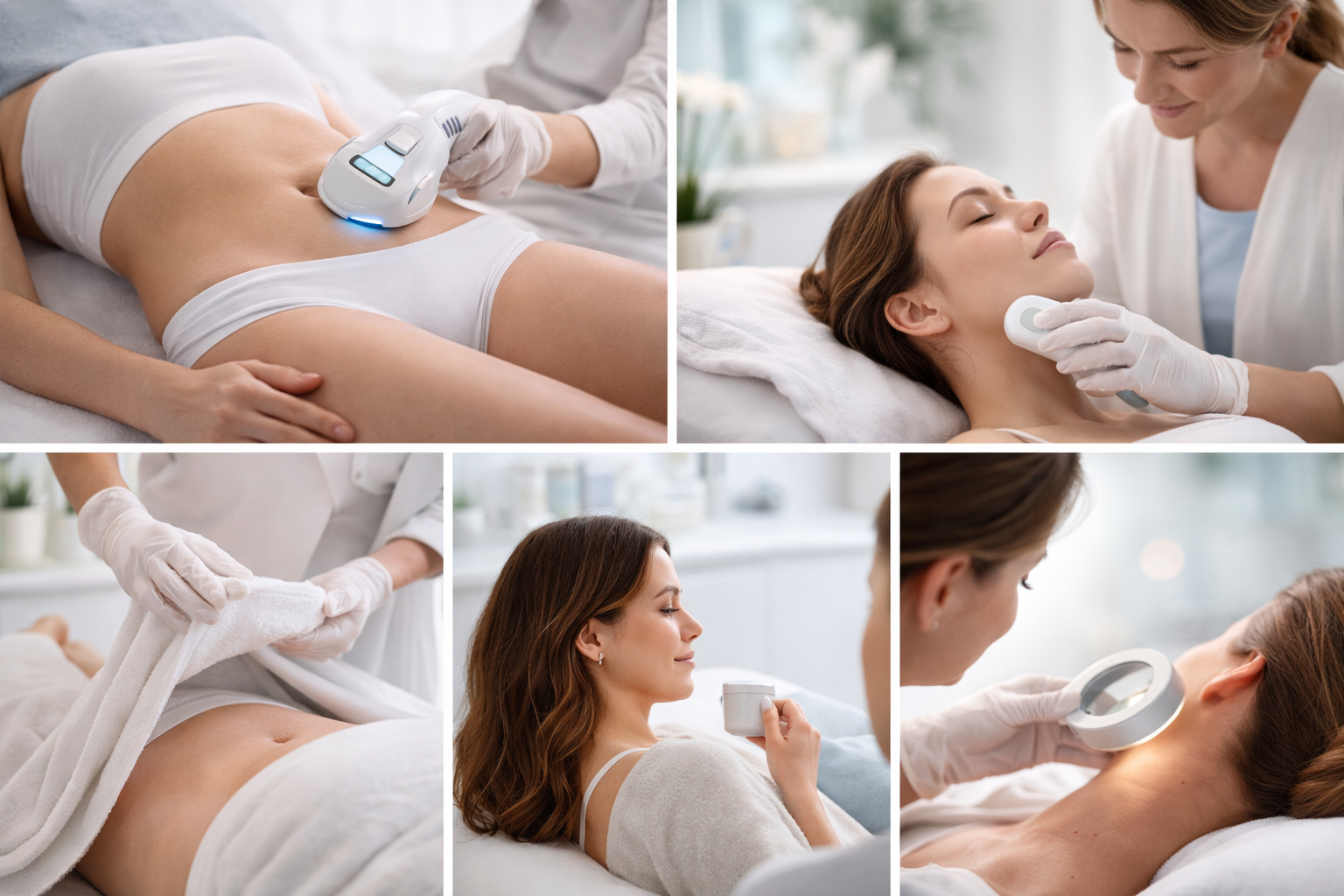
Treatments are introduced as possibilities, not prescribed solutions. Each option exists to serve a particular need, and no approach is recommended without thoughtful consideration of your individual situation, concerns, and comfort.
Non-invasive fat reduction treatments are designed to target specific areas where fat has accumulated in ways that feel resistant to change. These are not extreme interventions — they work gradually, producing subtle changes that develop over time. The process does not require downtime, and changes unfold in a way that allows you to observe and adjust at your own pace. The aim is always natural-feeling results that align with how you already see yourself, not a departure from it.
Skin tightening treatments work with the skin's own renewal processes to restore a sense of firmness and structure. Non-invasive in approach, they do not force change but encourage it — producing results that feel supportive rather than artificial. Each treatment is tailored to the specific area of concern and to the individual characteristics of your skin. Nothing is overcorrected. The goal is balance — to bring back a sense of ease in how the skin sits and moves.
Private concerns deserve private, professional attention. Intimate wellness treatments are carried out with complete discretion and a level of clinical care that reflects how seriously these concerns are taken. Comfort throughout the process is the primary focus. Nothing is assumed, and nothing is rushed. The conversation happens at your pace, and any treatment chosen is explained fully and carried out with precision and sensitivity.
Targeted treatments for skin lesions and visible skin changes are available for a range of concerns — from long-standing marks to more recent changes that have drawn your attention. Each approach is assessed individually, with safety and appropriateness for your skin type and concern at the centre of any recommendation. Procedures are precise and minimally disruptive, designed to address what is needed without going beyond it. Comfort and clarity are maintained throughout.
One of the most important aspects of any aesthetic treatment is having a clear and honest understanding of what it can and cannot do. Results that feel meaningful are far more likely when expectations are grounded in reality from the beginning.
Non-invasive treatments are not dramatic interventions. They do not transform. They refine. They support. They encourage the body toward subtle, sustainable changes — changes that, at their best, are felt more than they are seen.
"Sometimes the most profound shifts are the personal ones. The ones that rest quietly in the body — soft, still, and profoundly comforting. Real change doesn't always have to be visible. It just has to feel true for you."
Results from non-invasive treatments vary between individuals based on many factors, including skin type, the specific area of concern, lifestyle, and how the body responds to treatment. These variables are discussed openly at the outset so that any decision you make is fully informed. There are no exaggerated claims here — only honest conversations about what is realistic and what is possible for you specifically.
Safety is not an add-on to professional aesthetic care. It is the foundation of everything that happens. Every treatment, every conversation, and every decision made in a clinical context should reflect a commitment to the wellbeing of the individual above all else.
All treatments are selected and applied based on clinical suitability — not on what is trending or what has been requested without proper assessment. Every recommendation is grounded in professional evaluation.
The selection of non-invasive treatments is itself a safety-first decision. These approaches carry significantly lower risk than surgical alternatives, and are chosen because they offer meaningful results without the complications associated with more invasive procedures.
Strict standards of confidentiality apply to every aspect of your care — from the conversations that take place to the records that are kept. What you discuss stays within the professional relationship. This is not just good practice; it is a fundamental part of how care is delivered here.
You are never left wondering what is happening or why. Every stage of any treatment is explained before it begins, and you are kept informed throughout. Questions are welcome at every point, and no step proceeds without your understanding and agreement.
Nothing is recommended simply to fill a treatment plan. If a particular approach is not suited to your needs, your skin, or your situation, that is communicated clearly. The standard is always what is appropriate and safe for you — not what is available.
The physical environment in which treatment takes place is designed to support calm, safety, and professionalism. It is not overly clinical in its feel, but it meets the standards that professional aesthetic care demands. You can feel comfortable from the moment you arrive.
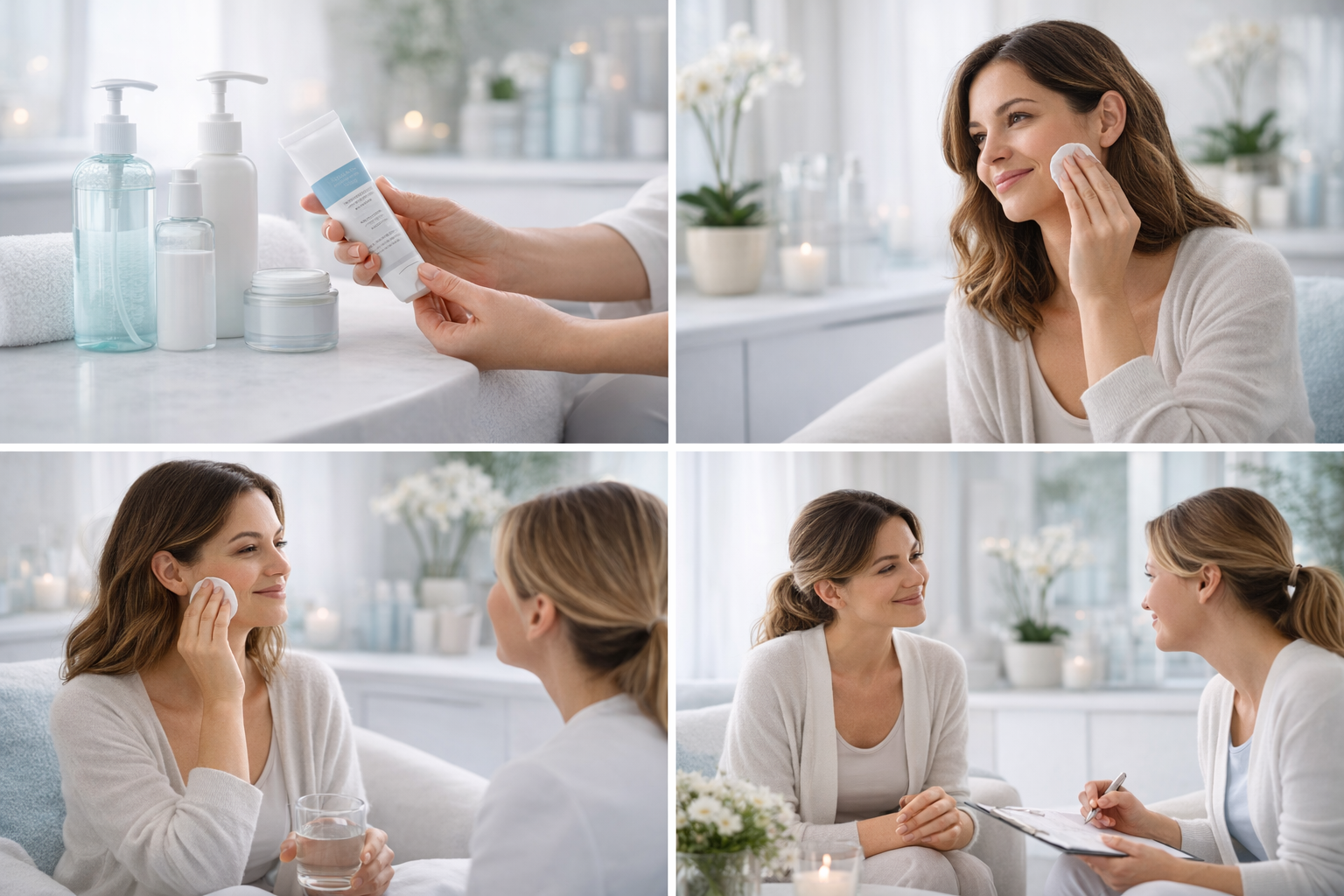
The end of a treatment session is not the end of the process. Aftercare is an important part of any non-invasive aesthetic approach — both in terms of supporting the results that have been achieved and in terms of ensuring your comfort and wellbeing in the time that follows.
Aftercare guidance is provided clearly and practically, tailored to the specific treatment you have had and to your individual circumstances. There is nothing overwhelming about it — it is simply a set of considerations that help your body make the most of what has been done.
In the immediate period following treatment, specific guidance will be provided about what to avoid, what to prioritise, and what to look out for. This varies depending on the type of treatment carried out and will always be communicated clearly before you leave.
Many non-invasive treatments work by stimulating the body's own regenerative processes. Supporting those processes in the days and weeks that follow — through appropriate skincare, hydration, and other practical steps — can make a meaningful difference to how results develop.
As changes develop over time, you may notice things that prompt questions or that suggest an adjustment might be useful. That feedback loop is part of the process. Returning with observations — whether about results you are pleased with or concerns you have noticed — is always welcomed.
The longevity of results from non-invasive treatments varies depending on the type of treatment, the area addressed, and individual factors. Realistic guidance about maintenance — including whether follow-up treatments may be appropriate at a later stage — is provided openly so that you can make decisions that are right for your longer-term goals.
It is entirely natural to have questions — especially when something involves your body. The following addresses some of the things that come up most often. If your question is not covered here, it can always be raised during an initial conversation.
Not at all. Many people arrive with only a vague sense that something feels different — without being able to name it precisely or articulate what they would like to change. That is a perfectly valid starting point. The initial conversation is designed to help things become clearer, and there is no expectation that you arrive with clarity already in place.
Most non-invasive treatments involve minimal discomfort, and many people report finding them very manageable. The level of sensation varies depending on the type of treatment and the individual, and this will always be discussed in detail before anything begins. If at any point during a treatment you are uncomfortable, that is communicated and addressed immediately.
Results from non-invasive treatments develop gradually, and the timeline varies depending on the type of treatment and the individual. Some changes become noticeable within a few weeks; others continue to develop over a longer period. Realistic expectations are always discussed before treatment begins, so that the timeline involved is something you are fully prepared for.
One of the key advantages of non-invasive treatments is that they do not typically require significant downtime. Most people are able to return to their normal routine immediately or very shortly after a session. Any specific aftercare requirements — including anything that might affect your usual activities temporarily — will be communicated clearly before the treatment takes place.
Yes, completely. Everything discussed — from the very first conversation onwards — is treated with the highest level of confidentiality. What you share stays within the professional relationship. Privacy is not just something that applies after treatment; it is in place from the moment you begin to open up about what has been on your mind.
That is entirely respected. There is no expectation that a conversation leads to a treatment, and no pressure at any stage for you to commit to anything. Leaving with greater clarity — even if that clarity is that now is not the right time — is considered a completely legitimate and valuable outcome. Nothing is wasted by simply exploring.
This depends on the type of treatment, the area or concern being addressed, and how your body responds. A realistic picture of what to expect in terms of sessions will always be provided before you make any decisions. There is no one-size-fits-all answer, which is precisely why individual assessment is so central to the approach taken here.
Every person's experience is their own, shaped by individual circumstances, concerns, and what they were hoping to find. The following reflects some of what people commonly notice — not as a promise of what to expect, but as an honest account of what the experience has meant for others.
I had been thinking about it for years without doing anything. What surprised me most was that I didn't feel any pressure when I finally came in. I didn't have to commit to anything. I just talked, and that felt like enough to start with.
I'd been to other places that made me feel like I was on a conveyor belt. This was completely different. The pace was slower, and I felt like I was being listened to properly. It made the whole thing feel manageable.
Nobody made me feel silly for being uncertain. I came in not knowing much, and by the time I left I felt genuinely informed — not overwhelmed. The changes I've seen have been gradual, and that's actually what I wanted.

The approach here is built on a belief that decisions about the body deserve more than efficiency. They deserve patience, clarity, and a genuine understanding of the person behind the concern. That belief shapes everything — from the way conversations are conducted to the way treatments are chosen and carried out.
There is a deliberate retreat from the urgency that characterises so many clinical environments. The pace is slower. Not because anything is uncertain, but because clarity requires time — and time, in this context, is never treated as a cost.
Care that feels considered rather than clinical does not happen by accident. It is the result of consistent commitment to a set of values that place the individual at the centre of every decision.
Every person who comes in is seen as an individual with a story, not a case with a presenting concern. That distinction matters in how conversations happen and how care is delivered.
There is no timeline imposed, no decision rushed. The process unfolds at the speed that feels right to the person at the centre of it. Patience is not offered as a luxury — it is built into the approach from the start.
Information is shared openly — including the limitations of what treatment can achieve, the realistic timeline for results, and any considerations that are relevant to your specific situation. Nothing is withheld that would help you make a fully informed decision.
Confidentiality is not just a policy. It is a core value. Every conversation, every concern shared, and every decision made is held with complete discretion — because that level of trust is what makes genuine openness possible.
Understanding what to expect if you choose to take a step forward can help make that decision feel less uncertain. The following describes what the process looks like from the very beginning — simply and honestly.
If you have thought about something even in a small, passing way — that already counts for something. These thoughts rarely arrive with clarity or a clear plan. More often, they show up quietly — a gentle awareness, something that sits just below the surface of daily life. You do not need to be certain, or prepared, or ready in any conventional sense. The only thing required is a small willingness to explore. That is enough to begin.

Change that feels genuinely your own does not have to be dramatic to be meaningful. Sometimes the most significant shifts are the ones that happen quietly — that rest in how you carry yourself, how you move through everyday moments, how you feel in your own skin.
This is the space in which this kind of care operates. Not a place defined by ideals or expectations. Not somewhere that asks you to be a version of yourself you do not recognise. But a calm, supportive environment in which something you have been carrying — however quietly — can begin to be addressed.
There is no urgency here. No pressure to decide. No expectation of any particular outcome.
Just the possibility — gently extended — that it could feel a little better than it does right now. And sometimes, that possibility alone is where everything quietly begins to change.